
← Vissza a 150 év 150 tárgy főoldalra
The Archaeological Collection of the Jász Museum
The history of the archaeological collection of the Jász Museum is closely intertwined with the study of the past of the Jászság region. In the first decades of the museum’s existence, relatively few archaeological objects entered the institution, so in this period one can hardly speak of an independent and substantial archaeological collection. The first decisive figure in its early growth was Viktor Hild, who worked for the museum between 1899 and 1902. He carried out significant numismatic and archaeological collecting, and his research, excavations, and notes remain important sources for the archaeological past of the Jászság to this day. Several early finds entered the museum through his efforts, including a Roman funerary stele discovered in the vicinity of Jászboldogháza, as well as other assemblages that defined the early phase of the collection. Hild’s later collection, taken to Szolnok, also became one of the foundations of the archaeological holdings of the Damjanich János Museum, yet his role has remained an indispensable starting point in the archaeological history of the Jász Museum. Finds from the early period also include those that entered the museum from the La Tène-period warrior grave at Jászszentandrás and from the lime-sand brick factory area in Jászberény.
In 1913, János Banner became the head of the museum. Although he did not conduct independent archaeological excavations in the Jászság, he played a role in organizing the museum’s collection. His later career clearly shows that the early history of the Jász Museum was connected with important figures in Hungarian archaeology.
The actual foundation of the archaeological collection is associated with József Komáromy. He had already established close ties with the museum during the directorship of Kálmán Réz and carried out several excavations in order to enrich the collection. It was during this period that the first more significant finds entered the museum from the sites of Jászberény-Belsőszőlők and Négyszállás. By the early 1940s, a considerable body of archaeological material had already been assembled, as reflected in the museum yearbook covering the period 1938–1943. The particular importance of this era lies in the fact that by then not only specialists but also civilians supporting the museum had taken part in assisting archaeological work. The names of Prückner, later József Porteleki, János Blénessy, and Ferenc Németh are all connected to this period, while József Prückner left his own archaeological collection to the museum, where it still forms an important part of the holdings today.
The Second World War interrupted this development, but in the 1950s there was still important progress in organizing the collection. Material from the excavations of József Komáromy and József Csalog further enriched the museum’s archaeological holdings, and it was also at this time that the basic inventory system still in use today was established. The first inventoried archaeological object was a Middle Copper Age vessel of the so-called “milk jug” type found at Jászberény–Borsóhalom. József Csalog worked at several sites in the Jászság and also played a significant role in the cataloguing of earlier assemblages.
Another break came in 1962, when the Jász Museum was incorporated into the county museum system under the Damjanich János Museum in Szolnok. With the loss of its independence, the autonomous archaeological collection was closed, the museum’s collecting scope ceased, and archaeological excavations in the Jászság were directed from Szolnok. As a result, material from several important sites in the region did not enter Jászberény but the county museum’s collection instead. The later return of municipal maintenance in itself did not yet change the situation of archaeology: a real professional turning point came only from 2016, when the possibility of carrying out independent archaeological work in the museum was reopened.
A new era for the archaeological collection thus began to unfold from 2016 onward. At that time an archaeologist-curator once again joined the institution, and with this the systematic collection, research, and excavation of archaeological material resumed. The first newly accessioned object was a Conquest-period cap finial donated to the museum by Kálmán Hajzer, a local patriot from Pusztamonostor. From that point on, the Jász Museum once again became not only a guardian, but also an active shaper, of archaeological research in the Jászság.
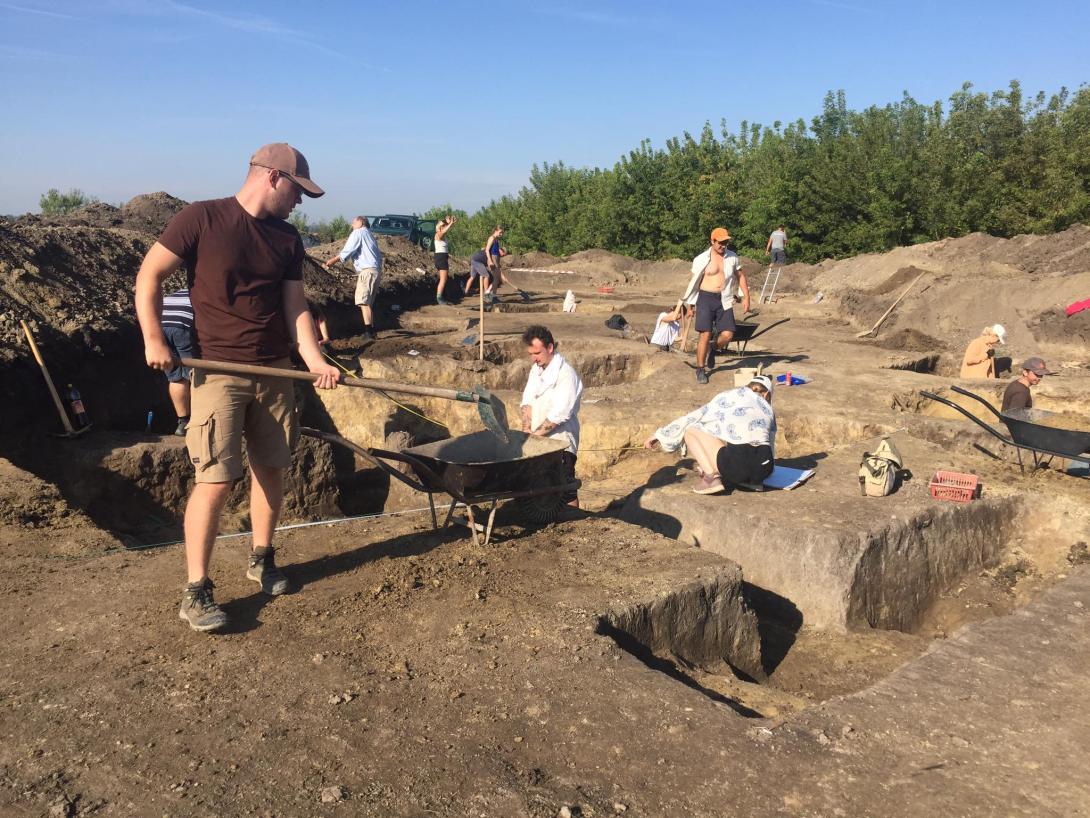
One of the most important pillars of this new era was the strengthening of community archaeology. The museum’s community archaeology group, now known as the Jászkakasok, has enriched the museum’s collection and knowledge of the Jászság’s past in recent years with more than 7,000 objects and the identification of more than 100 new sites. This work clearly demonstrates that archaeological research in the region remains a shared cause, shaped together by museum professionals, research partners, and the local community.
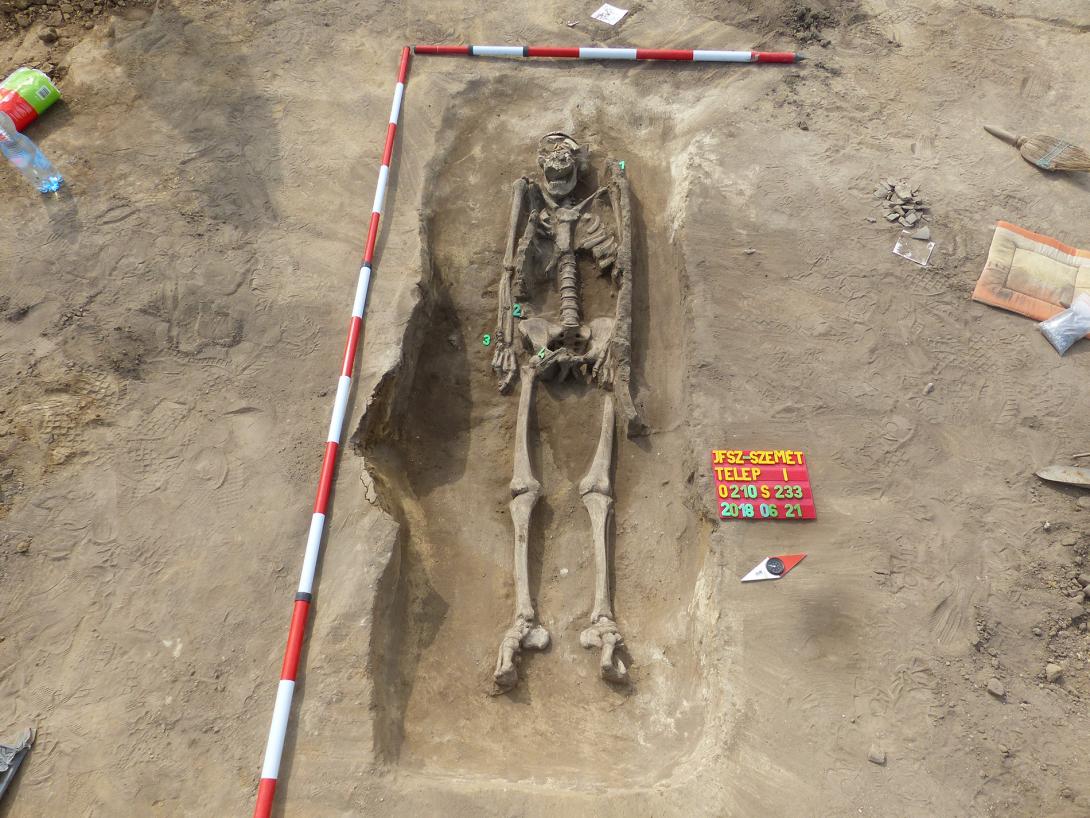
The years after 2018 brought particularly significant excavations. At Jászfényszaru, during the rescue excavation preceding the construction of the SRF factory, a 3rd-century Sarmatian settlement, four Conquest-period graves, and a Paleolithic campsite associated with the Gravettian culture were uncovered. Several of the Conquest-period graves were of outstanding significance: one yielded a sabre and a tubular pouch-fastener, while another contained a knot-picker. Also from 2018 onward, cooperation began with Pázmány Péter Catholic University in the study of Conquest-period sites.
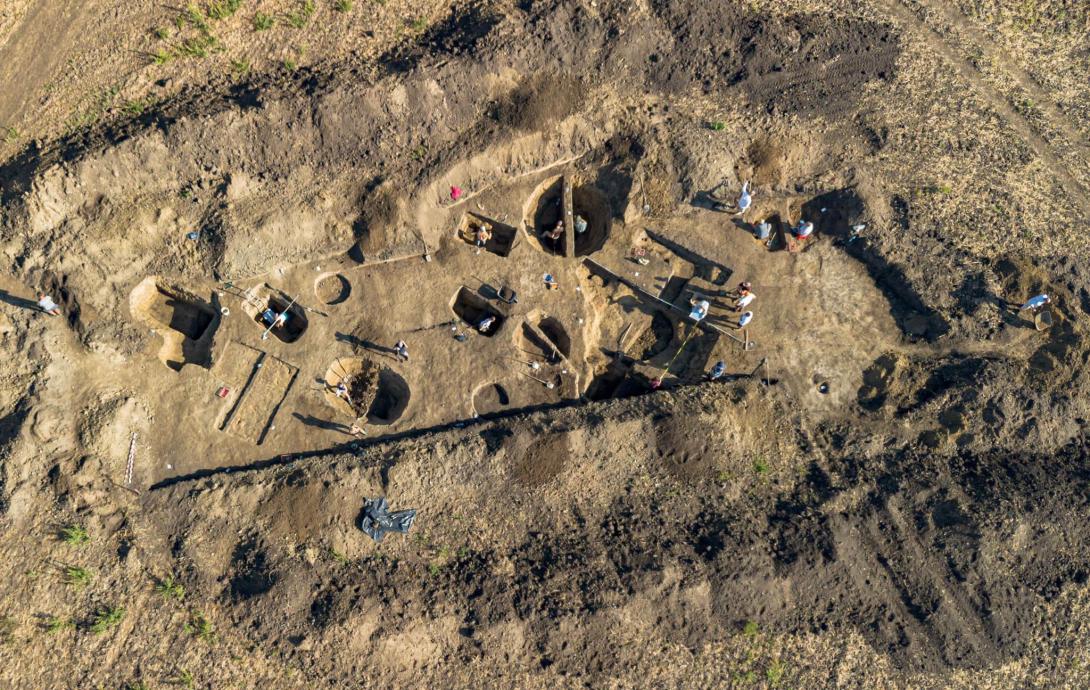
Preventive excavations were carried out for two years along the route of Jászberény’s northern bypass, Road 32. These investigations also produced significant new results: a particularly rich Late Neolithic burial yielded four large spondylus beads, and the remains of a remarkable house with a post-built structure and foundation trenches were also uncovered. In 2021, a Conquest-period grave excavated near Jászjákóhalma contained an unusual sabre with a shagreen-covered hilt. Another important result of 2021 was the excavation of an approximately two-hectare Sarmatian settlement at the site of Thyssenkrupp Hungary.
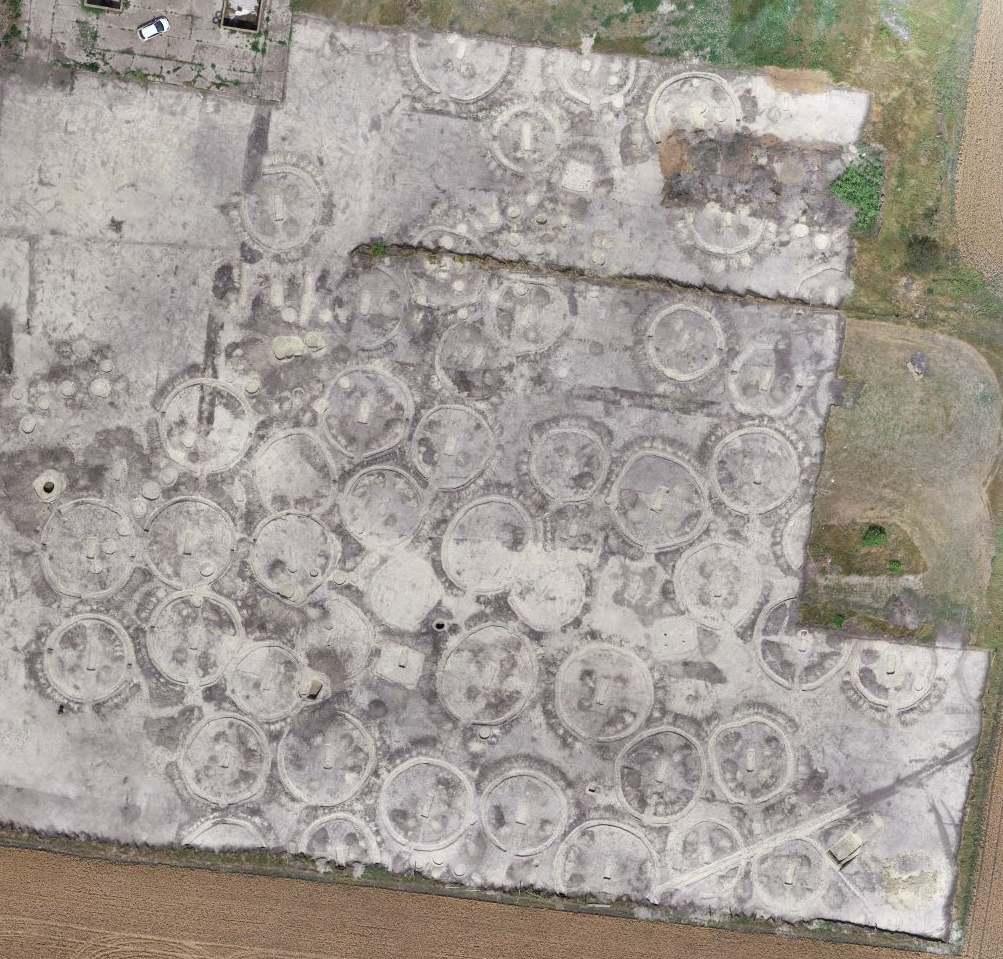
The period between 2022 and 2024 may be regarded as the peak years of excavation activity. In 2022, the museum excavated a 2nd–3rd-century Sarmatian cemetery with circular ditches at the site of Jánoshida–Vörös Hajnal Tsz. In the same year, Paleolithic research was conducted near Jászjákóhalma in cooperation with the National Archaeological Institute of the Hungarian National Museum and the HUN-REN Institute of Archaeology. Also in 2022, an important find was the exceptional Roman hexagon discovered in the parish church of Jászberény. Excavations were also carried out in Fegyvernek in 2022–2023, while in 2023 part of an Árpádian Age settlement was investigated in the area between Jászberény and Jásztelek.
One of the most widely noted results of this period was the Roman-period physician’s grave uncovered at Jánoshida–Márkuspart, which came into the spotlight in 2023. The excavation was carried out as a joint project with the ELTE Institute of Archaeological Sciences and the then HUN-REN Institute of Archaeology, after which research continued with ELTE. The medical instruments recovered from the grave became world-famous and now form one of the best-known new assemblages in the Jász Museum.
Among the outstanding recent investigations was also the excavation on Galamb Street in Jászberény, which contributed to a more precise understanding of the town’s early history. The present period is characterized by an increasingly broad network of research collaborations: today the museum works together with the National Archaeological Institute of the Hungarian National Museum, the University of Pannonia, Pázmány Péter Catholic University, and ELTE.
The institutional background of professional work has also grown stronger in recent years. From 2023, the former archaeologist-curator, András Zoltán Gulyás, was appointed director of the museum, and a new archaeologist, Áron Dávid, joined the institution. From 2024, Erika Szabó as technician and Viktor Hegyesi as IT and GIS specialist have strengthened the team, while in 2024–2025 István Steuer contributed to the museum’s professional work as a technician and numismatist.
All this clearly shows that the archaeological collection of the Jász Museum is no longer merely the guardian of the relics of the past, but also an active and continuously expanding center of archaeological research in the Jászság region.